
World Cup Stories: Guam
A new series starts with a look at the team that was the first eliminated in qualification for next year’s World Cup.

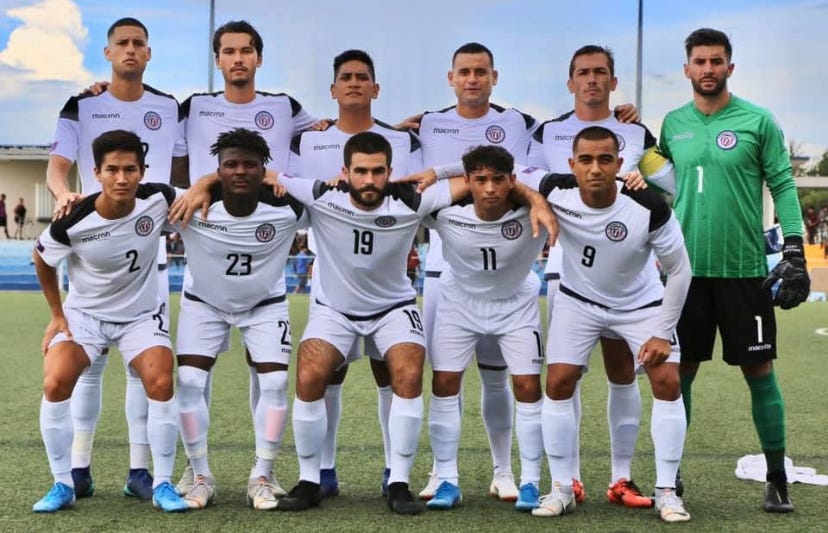
Guam 0 Singapore 1 - 17th October 2023
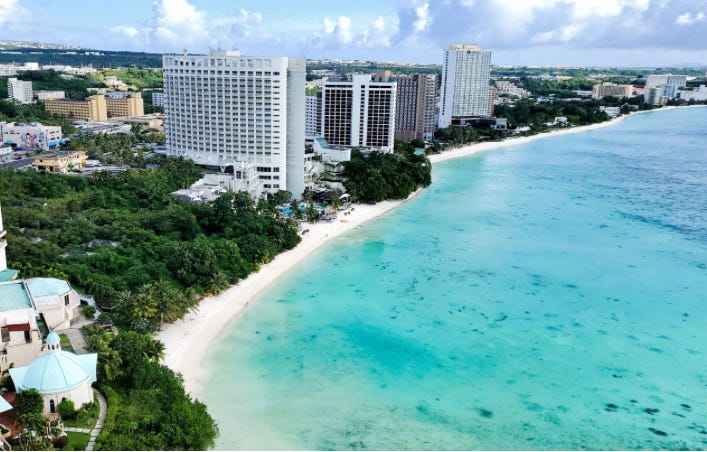
Guam is the largest island in Micronesia and the southernmost of the Mariana Island chain to the south of Japan. It is home to a population of approximately 170,000 people that are a mixture of native Chamorros and those from the Philippines and other Asian and Pacific islands.
The tropical climate ensures warm weather all year round and its beautiful beaches and rich culture draw a wealth of tourists, honeymooners and travellers each year.
There are still reminders of previous Spanish colonisation but the island was ceded to the USA in 1898 and an Americanisation is also evident, no more so than in the raft of shopping malls that can be found and a predeliction for American sports.
The island is also a critical US military hub and is home to a number of military bases. Following the bombing of Pearl Harbor in 1941, Guam was taken by the Japanese but was retaken by Allied forces in 1944 and has been a strategic location in the Pacific region ever since.
Guam also has the unfortunate distinction of being the first nation to have taken part in qualifying for the World Cup in 2026 that was eliminated. This may only be down to a quirk of fate as Guam’s time zone means that they were the first match to be completed on a day when 9 other nations also had their World Cup dreams ended but the record stands nonetheless.
Due to there being five rounds of qualifying in the AFC (plus a potential intercontinental playoff), things need to get started early and as one of the lowest ranked teams in the confederation, Guam were drawn to play Singapore in a two-leg knockout first round match to see who would make it through to the second round group stage.
At the time of the first leg on 12th October 2023, Guam were ranked as the 203rd best nation in the world (the sixth lowest on the FIFA scale), whilst Singapore were 157th, making Guam the underdogs in what promised to be an enticing contest. Incredibly, Guam hadn’t played an official match since 2021 and manager Ross Awa would be taking charge of his first contest. In contrast, Singapore had played as a nation more than 20 times in that period.
Under the floodlights at the National Stadium in Singapore, 10,355 fans arrived to watch a crucial match for both of their nations. Perhaps unsurprisingly, Singapore started as the stronger team and spent most of the early period attacking. They were unfortunate not to take the lead on a number of occasions, narrowly missing the target from, or just failing to make contact with, good crosses into the box.
In the 35th minute they did finally make the breakthrough though as Chris Van Huizen controlled a lovely cross-field ball and cut inside to the edge of the D before curling an excellent effort right into the top corner. It was a wonderful goal and just what Singapore deserved after the start that they had made to the game.
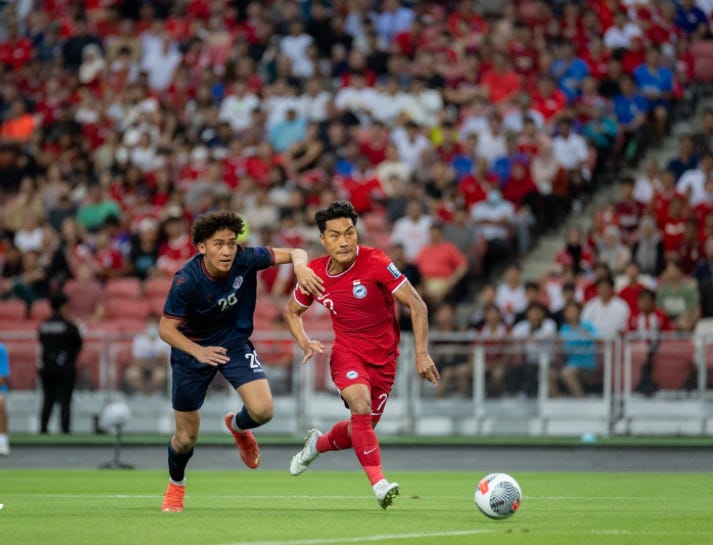
It didn’t take long for the lead to be extended either as just six minutes later Singapore scored from a corner. The ball was played in and not dealt with and after ricocheting around in the box, fell to defender Jacob Mahler who blasted it home. Singapore were in complete control and the crowd must have been wondering how many they could add in the second period.
However, despite continued domination, the hosts couldn’t extend their lead further and with 90 minutes up on the clock, the visitors were handed a lifeline when they were awarded a free-kick in a dangerous area. Veteran Jason Cunliffe stepped up and struck a superb effort into the top left corner of the Singapore goal. For all the extended pressure and efforts that Singapore had, Guam would only be one goal down when they took tie back to their own ground in the second leg.
With a slightly less impressive crowd of 1,012, the two teams lined up just five days later in the scorching early afternoon heat of Guam to continue their battle. It was impressive that the game could take place in Guam in the first place considering that there had been typhoon damage earlier in the year. So intense was the heat on this day though, that cooling breaks were needed throughout the match, and the home side played up to the temperature by displaying a physical style of play, showing their determination to claw back the difference.
Again, Singapore started stronger and proceeded to miss some good early chances but Guam had opportunities of their own in the first half, though neither Eddie Na nor Marcus Lopez could take them. By the time the match arrived at the break it was still goalless and there was still everything to play for.
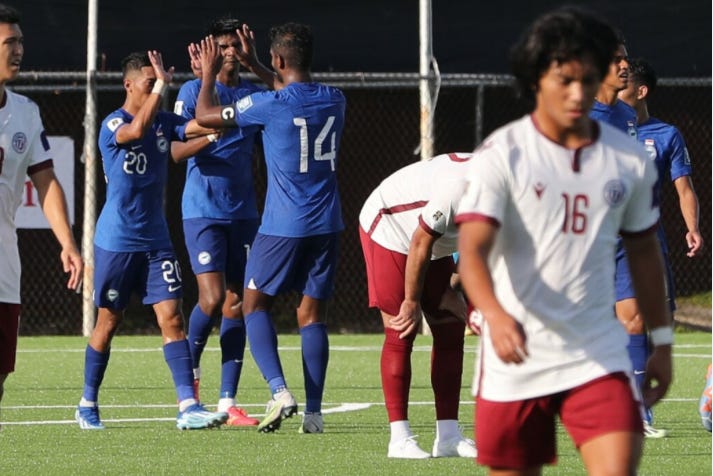
A change in tactics allowed Singapore to take control again in the second half but again Guam held firm. Finally though, in the 81st minute a breakthrough was made when Iqbal Hussein took control of a through ball by Shahiran and squared the ball across to Shawal Anuar who was waiting to fire home at the back post. Singapore finally had a two goal advantage and didn’t have too long to have to hang onto it.
However, Guam still didn’t lie down and forced Singapore to make a goalline clearance in the 85th minute to deny them. Legs were tiring though and three minutes into the seven that were added on, Shawal was put through again, forcing substitute Dane Agustin to bring him down. He was shown a straight red for denying a goalscoring opportunity and not long after, the referee blew the final whistle. Guam’s dream was over while Singapore’s lived on.
When interviewed afterwards, Ross Awa admitted that his team needs to take part in more international matches. He did mention however that despite their lack of games, potential had clearly been shown in how close Guam had taken the tie and that he now had an idea of how to move forward and make the most of his team’s capabilities.
Regardless of their defeat on this occasion, Guam have come a long way in a relatively short period of time. Their first foray into World Cup qualification was an attempt to reach the 2002 tournament. Over the course of two games against Iran and Tajikistan, they conceded 35 goals and scored none. They didn’t make an attempt again until qualifiers for the 2018 World Cup came around.
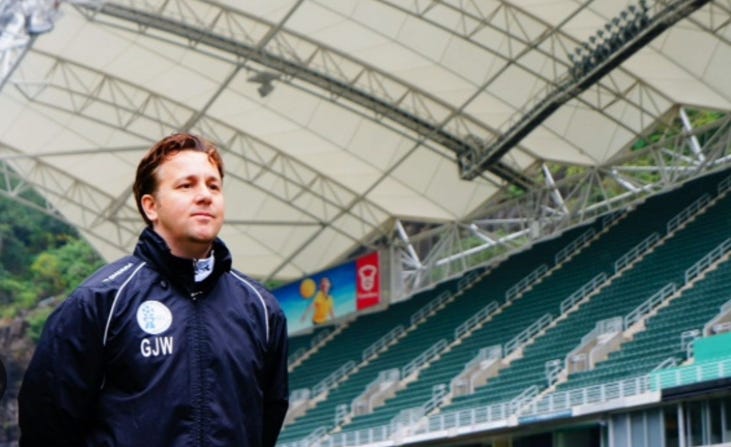
Improvements were made in the meantime though, firstly with the 2012 appointment of English coach Gary White who brought some crucial experience to the setup. White made several key changes which enabled Guam to look forward and have a long-term plan to try and improve.
White encouraged Guam to embrace their indigenous culture and create an identity for the players to play for. Their nickname of ‘Matao’, which was the name of the nobles in Chamorro society, was taken during this time. White also encouraged the players to perform the Inifresi, which is a Haka-like chant, before games to pledge themselves to their nation.
There was also a key focus on youth development with an eye towards securing the future. White was a founder of the Guam Football Association National Academy, an institution created to try and improve that quality of young players coming through. Development of coaching standards was also a priority.
Investment through a variety of FIFA schemes also greatly helped as facilities were hugely improved and new pitches built so that training could be of a higher standard. This relationship with FIFA continues to this day and Guam are heavily involved in programmes such as FIFA Forward and the FIFA Talent Development System which now supports the National Academy.
The FIFA Foundation Football for Schools was launched in Guam in 2022 at a ceremony where around 400 boys and girls were invited to take part in small matches. The idea is to promote football throughout schools in Guam, build its popularity as a sport and start from the bottom up.
Under White, things began to improve. In 2015, Guam caught the attention of the world when they topped their 2018 World Cup qualifying group for a short period of time in a campaign that saw them beat Turkmenistan at home for their first ever qualifying win before also beating India and holding Oman to a goalless draw.
Guam still finished fourth out of five in the group and were eliminated, but momentum had been gained and confidence was rising. During White’s tenure, Guam rose to an all-time high of 157 in the world rankings. Although they didn’t actually qualify for anything, they weren’t getting absolutely dominated by other teams either.
White left for pastures new in 2016 (he was briefly linked with the England Under-21 coaching job in 2018 while manager of Chinese Taipei) but Guam carried on building. During qualification for the 2022 World Cup, they defeated Bhutan 5-1 on aggregate in the first round.
In the second round the standard increased drastically as they were drawn against Syria, China, the Philippines and the Maldives. Guam lost all eight games, conceding 32 goals while scoring only 2. However, more frequent matches against higher quality opposition can only be a good thing in the long run.
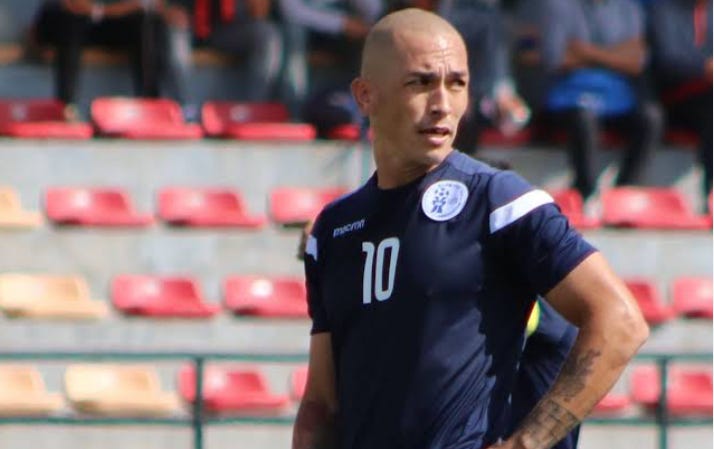
In the second leg of the victorious tie against Bhutan, Jason Cunliffe scored a hat-trick. The attacker made his debut for Guam in 2006 and holds the record for the number of caps and the number of goals scored. Due to the length of his involvement with the national team, he has seen much of the improvement first-hand.
In a 2023 interview with FIFA.com, prior to the matches with Singapore, Cunliffe said: “People may look down on us, and I’ve been part of some of the worst losses and I’ve seen the kind of worst days that not many have and lived through that, but what I want to say is that football is the great equaliser.” He went on to say, “We have really talented kids coming through the system in Guam and so much potential, and I know what we are capable of.”
As someone who has already qualified for his coaching license, Cunliffe may be a person who could help to nurture some of that youth talent in the future to help his national improve their results with greater regularity. One of the first priorities may be to try and ensure that players from Guam are getting more high quality football experience on a more regular basis.
The most recent Guam squads have been a disparate bunch. Many of the players still play in Guam itself, but others have played in far reaching places such as Mongolia, India, the Philippines and New Zealand, often not at the top level.

Considering the ties to the USA that the country still holds, it would seem that a greater opportunity could exist in using the various systems in the States to try and improve things. Cunliffe himself played football at college before moving between Guam and the Philippines during his professional career.
There have been players that have played for the Guam national team that have played in the MLS. Ryan Guy, who played 33 times for Guam between 2013 and 2016 played for the New England Revolution. He also had trials with English clubs and played European football for St Patrick’s Athletics of Ireland.
Another player of this ilk was A.J. DeLaGarza, who played 14 times for Guam between 2013 and 2019. DeLaGarza played for various clubs in the MLS but garnered most success during his time at the LA Galaxy where he was part of a squad that won three MLS Cups and two Supporters’ Shields.
Both of these players were American born but used their Guamanian heritage in order to play for the Matao. Further utilising this route, as other countries do, as well as encouraging more players to enter the US college system to gain experience through high-quality coaching may be another way for Guam to improve their long-term prospects.
Either way, the AFC’s smallest participant has come a long way since being defeated 19-0 by Iran during that first qualifying campaign 25 years ago. To take some major scalps and to hold others relatively close shows vast improvement, and with further FIFA investment and some shrewd development, there is plenty of hope for the future.
Thanks Sam. Mesmorised again by your blog. So exciting to read in the build up to the World Cup. You make my Saturdays with your insightful blogs. Keep them coming, along with your art work. BFF